Understanding Visa Requirements for Startups

Adapted from Homeland Security by Phantamage @ flickrThis is a nice post from Chrisopher Golda on his blog, about Immigration Status for Startups.

He breaks it down into the best types of visas to get based on your role with the startup here in the United States, and explains why.

  • Founders  O-1TN or E-2 visas
  • Employees  O-1TN or H-1B visas
  • Interns  J-1 visa

Typical lawyers won’t be able to assist you with good visa advice, because it goes beyond the day-to-day incorporation, stock options agreements, and the like so doing some research and becoming aware of the different options you have as a Startup Founder or Employee is a good step to take. Worth checking out.

How Much Equity Should You Give?

Allocating equity among co-founders is typically a process, involving a lot of gut feeling, some back of the napkin math, and good judgement. Is also a frequently asked question with no easy answer.

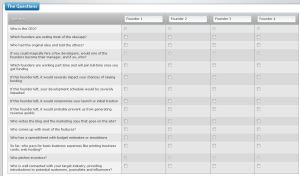
So here comes a great new tool, built by Foundrs.com, called “Co-Founder Equity Calculator“. Based on simple but important questions, it gives you what it believes is a fair equity stake for each founder.

Even if you don’t agree with the results, is a great way to get a productive conversion started with the founding team on how to allocate equity fairly.

Try it out!

C-Founder Equity Calculator by Foundrs.com

C-Founder Equity Calculator by Foundrs.com - Click to Use

How Angry Birds Saved Rovio from Certain Death

Based on Tombestone PSD by LockminThe Almost Certain Death of a Startup

It was the winter of 2006, three years after its founding and Rovio had already cut the staff from 50 to only 12 people and was running out of cash. Despite of doing work for gaming giants EA, Namco, and Real Networks, the company hasn’t had a big hit with any of the dozens of games they had produced.

Then, a last attempt was made to create what is now Angry Birds. It took them three years and over EU$100K and hundreds of sketches but they finally got something that felt like a winner and released it in late 2009. The 2009 holiday season came and went without even registering for Rovio. Another idea, another flop.

But then, in February of 2010 Apple agreed to feature Angry Birds on the Apple Store. It became an instant hit, reaching the number one downloaded app in only three days.

A Startup Story

The story of how Rovio almost died and was saved by Angry Birds is told by Forbes Magazine in a recent article, Audacious Birds,  discussing the company’s ambitions to become bigger than Disney.

For those of us outside the day-to-day operations of Rovio, their blockbuster success and subsequent $42 million dollar windfall look like lucky strikes. Sure, being featured on the Apple Store helped. Coming up with a great design helped. Even the fact that their games are simple, yet addictive, is an obvious path to garnering legions of fans.

The back-story though, and what I find interesting, is that they are very similar to a bunch of other startups out there and also the proof that the majority of startups don’t survive long enough to get their breakthrough idea distributed.

It took Rovio over 50 games to come up with their Angry Birds concept. Hundreds of designs, and three years in development. Lucky break? Sure, but you can’t have a lucky break without failing a few times first.

I have not failed.  I’ve just found 10,000 ways that won’t work.  ~Thomas Edison

You Have to Fail to Succeed

Despite what most people think, success takes more than luck. It’s hard work. And is trying until you get it right.

AirBnb is a case in point. They had a great idea but it didn’t catch on the first time. They “launched” the service four times until it finally took off.

Groupon is another startup that almost didn’t work, now being one of the most anticipated IPOs in recent history, having even turned down a $6 billion offer from Google.

And I’m sure you can come up with a couple more examples, at least, of other startups that had a tough time making it. And I doubt that any founder will tell you it’s easy to have a big break. Sometimes you have to fail to succeed.

UPDATE: Another interesting case of almost death is Cvent, told by its founder on TechCrunch.

Finding Technical Co-Founders

This is probably one of the most asked questions of all, especially by non-tech founders (of course!). Yup, you have websites focused on posting startup jobs and others with the sole intent to help find tech co-founders. So why is the question still being asked?

Jason Freedman hit it spot on I think, with a blog post titled “Please, please stop asking how to find a technical co-founder“. You don’t have to go read the full post if you just focus on his simple advice:

You don’t find a technical cofounder, you earn one.

Jason, you nailed it.


How to Choose an Incubator and the Ideal Entrepreneur

Confused about incubators, accelerators, and all the in-between types of places geared for startups out there? Well, maybe this video won’t clear that up but it will give you some good laughs.

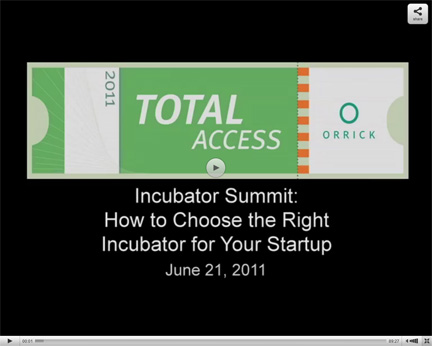
At the recent panel discussion “Incubator Summit: How to Choose the Right Incubator for your Startup“, some great entrepreneurs discussed what characterizes incubators, co-working locations, accelerator, and also talked about what makes for great entrepreneurs.

Participated Adeo Ressi (Founder Institute), Dave McClure (500 Startups), Jonathan Abrams (Founders Den),  Kindra Tatarsky (Astia), and Cameron Teitelman (StartX). A great exchange of ideas (especially since the panelists didn’t necessarily agree with each other) and good content worth checking out.

Click below to go to the video page.

Incubator Summit How to Choose the Right Incubator

Hackers & Founders Launch New Incubator

If you’re in San Francisco and wished you could join an incubator but for any reason you didn’t, now there’s another option. Hackers & Founders “The Co-Op” is a different type of incubator, focusing more on business advice than in giving you money, is an interesting proposition.

How The Co-Op Works:

  1. Founders in The Co-op get together for weekly dinners where they listen to speakers and mentors and become a community.
  2. Founders are encouraged to become advisers in each other’s companies by trading small (0.25% to 0.5%) equity stakes.
  3. After working together on things like learning how to pitch and present, as well as the ropes of funding, founders are connected to the investment community (office hours are setup with a prominent angel in the community, personal introductions are made and AngelList).
  4. Towards the end of the program short video pitches are made and investors can view them online.
  5. Finally, there’s a party where investors meet founders in person.

For a full description and the history behind this new incubator-style program, check out the full article on Hackers & Founders site.

Wired Tells Us How YCombinator Works

YCombinator LogoAn interesting article appeared recently on Wired Magazine talking about YCombinator. If you’ve been following the incubator for a while, there’s not much new but it gives a nice account of how the demo day works, the internal meetings, and a bit of what it feels like to be part of the lucky ones that make the cut and are accepted into the program.

Link to the story “YCombinator is Bootcamp for Startups“:

http://www.wired.com/magazine/2011/05/ff_ycombinator/

What Makes a Successful Startup?

An interesting post from Steve Blank talks about how he met the guy who went on to found The Startup Genome Project and just released their first report on what makes a startup successful.

Key findings are:

  1. Founders that learn are more successful
  2. Startups that pivot once or twice times raise 2.5x more money
  3. Many investors invest 2-3x more capital than necessary in startups that haven’t reached problem solution fit yet
  4. Investors who provide hands-on help have little or no effect on the company’s operational performance
  5. Solo founders take 3.6x longer to reach scale stage
  6. Business-heavy founding teams are 6.2x more likely to successfully scale
  7. Technical-heavy founding teams are 3.3x more likely to successfully scale with product-centric startups with no network effects
  8. Balanced teams with one technical founder and one business founder raise 30% more money
  9. Most successful founders are driven by impact
  10. Founders overestimate the value of IP before product market fit by 255%
  11. Startups need 2-3 times longer to validate their market than mostfounders expect
  12. Startups that haven’t raised money over-estimate their market size by 100x
  13. Premature scaling is the most common reason for startups to performworse
  14. B2C vs. B2B is not a meaningful segmentation of Internet startupsanymore because the Internet has changed the rules of business
It’s worth checking out. Get the Startup Genome report here.

What Office Hours at YCombinator Looks Like

If you ever wondered what would be like to chat with Paul Graham about your startup, here’s your chance to take a peek at what’s like to be questioned, contradicted, and enlightened during YCombinator‘s famous “office hours”.

At TechCrunch Disrupt, they asked Paul to give a few startup founders some on-stage advice as if he were talking to his own incubator companies. The result is pretty entertaining and makes you think about the questions he poses and what you would answer.

The two key questions that came up during every single interview, are “what problem are you solving” and “who needs your product desperately”. Think about that for a moment and write down your answer. Now watch the video and see how others tried answering these same critical questions.

Click the image below to watch and enjoy!

TechCrunch Disrupt Office Hours

Choosing Your Angel Investors

Max Shapiro from People Connect Staffing turned me on to this great video of a recent gathering of Angels and VCs titled “How to Select Your Angels“, from a Total Access session sponsored by Orrick.

The panelists were Jeff Clavier, Jared Hansen, Rob Hayes, Mitchell Kapor, and Naval Ravikant and moderated by Larry Kane.

Here are some key points from the talk:

  • The bar for startups is set higher, you need more than an idea to get funding, need to show traction.
  • Investors want to see something that actually works, if you have revenue is better.
  • What’s your team structure? Investors want to know who’s going to actually do all the work. Make sure you have more “doers” thank “executives” in your team.
  • The product that gets funding is almost never the product that ends up winning, so investors are looking for a team that can move in a big enough market, take whatever they started out with, and make it work, become massive.
  • You’ve gotta know how customer acquisition, retention, and referral will work for your company. If you don’t, is likely investors may pass (higher risk).
  • Naval says “focus on the product, the team, when the time is right the money will show up” and what he means is that the funding process takes time and energy, don’t let that distract you.
  • On incubators, they suggest you pick one as if you were choosing the best college. Each incubator has its own culture, find one that fits you.
  • A key aspect of getting funded is showing you know where you are, how far you’ve come, and that you know the meaningful milestones you have to reach for your next round of financing.
Click below to watch the video.

How to Select Angel Investors